
Ghana’s startup ecosystem has expanded steadily over the past decade, with companies now operating across fintech, healthcare, manufacturing, trade, and mobility. While some are still refining their early products, others have already reached revenue-generating stages and are expanding their customer base.
To understand where investors are currently placing attention, several ecosystem operators and investors shared the Ghanaian startups they are watching closely. Their selections cut across companies building financial infrastructure, healthcare services, export systems, and industrial capacity in the country.
Euler Bropleh, Managing Partner, VestedWorld
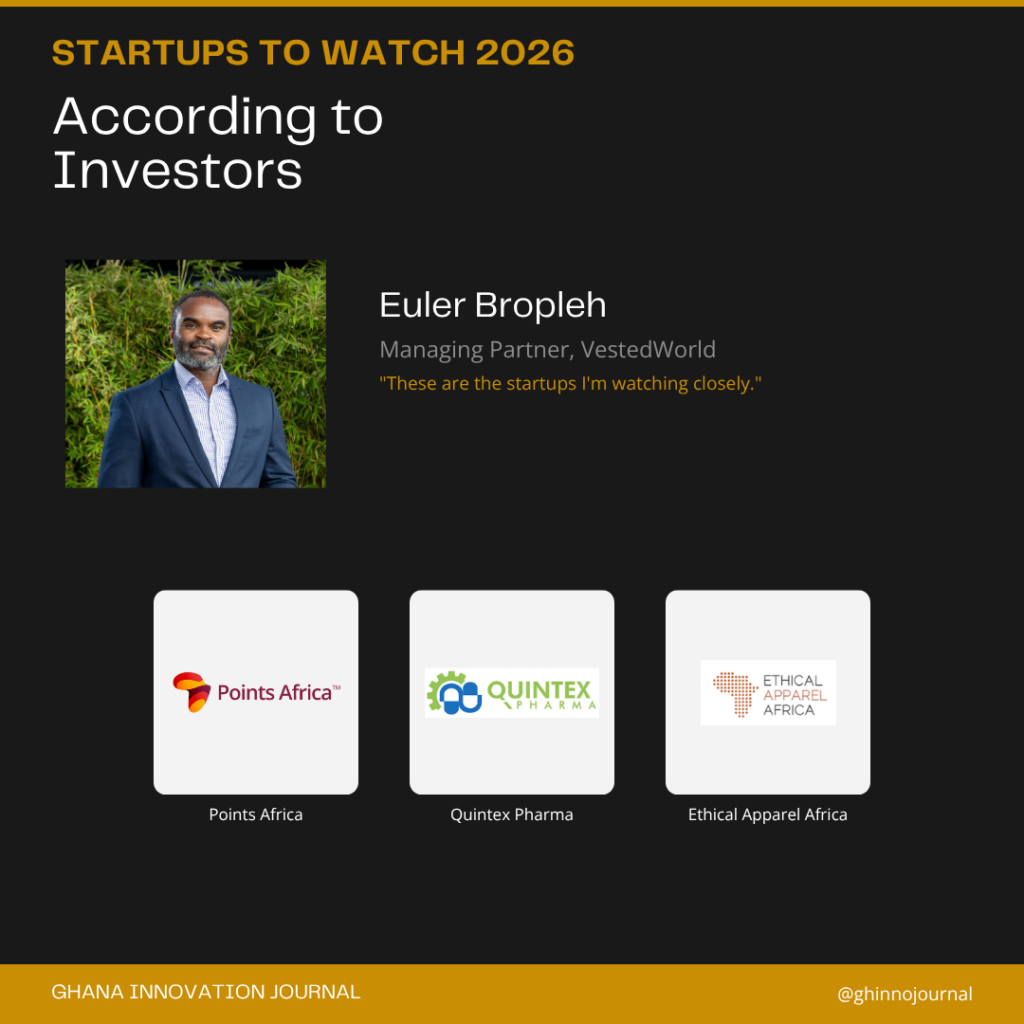
Quintext Pharma: Quintex is uniquely positioned to capitalize on Ghana’s (and Africa’s) urgent need for local pharmaceutical manufacturing, supported by favorable policy, strong partnerships, regulatory progress, and a robust customer pipeline. The company has an experienced team and is building a business that is critical to ensuring resilience, stability, and availability of critical medicines.
Points Africa: The company has an extremely experienced management team, strong partnerships, and is leveraging innovative solutions to supercharge loyalty programs in Ghana and a few other markets by allowing consumers to earn points through their daily transactions with a wide range of businesses and redeem those points at a range of redemption partners while also providing retailers/brands with data and insights on their customers’ behavior.
Ethical Apparel Africa: As demand for ethical and sustainable fashion rises, and global brands seek to diversify their supply chain, Africa is emerging as a competitive textile manufacturing hub. Companies like Ethical Apparel Africa are poised to benefit from a coordinated effort to develop the region’s textile value chain. These companies are improving their quality and efficiency while adhering to socially responsible practices.
Kwamina Oblie Botchway, Angel Investor
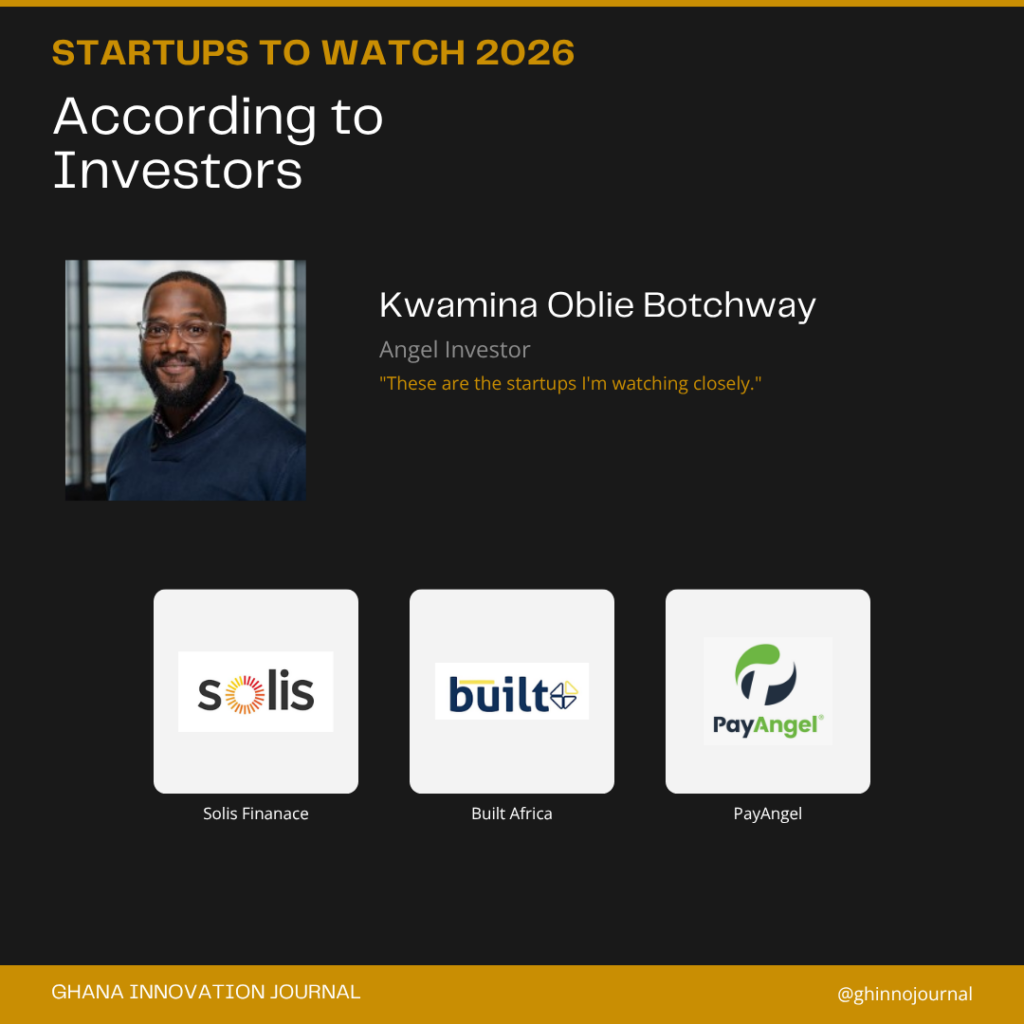
I believe fintech remains the most viable market for startups in Ghana and on the continent. Africa’s challenges require infrastructure-driven solutions, and fintech offers the most accessible entry point for entrepreneurs—demanding less investment compared to other infrastructure sectors. I’ve had the pleasure of engaging personally with the teams behind these fintech startups, and their innovative approaches to solving key challenges stand out:
Solis Finance: A neobank for Ghanaians, their go-to-market strategy is particularly compelling. By partnering with an international ride-hailing company, they aim to serve gig workers, entrepreneurs, and SMEs.
Built Africa: Similarly, Built, an accounting software, is focused on empowering gig workers, entrepreneurs, and SMEs. Businesses catering to this segment are well positioned to ride Africa’s growth wave, fueled by a young, tech-savvy population.
PayAngel: A remittance app with a focus on the UK – Ghana corridor. Access to capital remains the biggest hurdle for businesses in Ghana. Remittances—not bank loans or government funding—represent the most viable and scalable source of capital for individuals and businesses.
Araba Andoh, Community Lead, A&A Collective
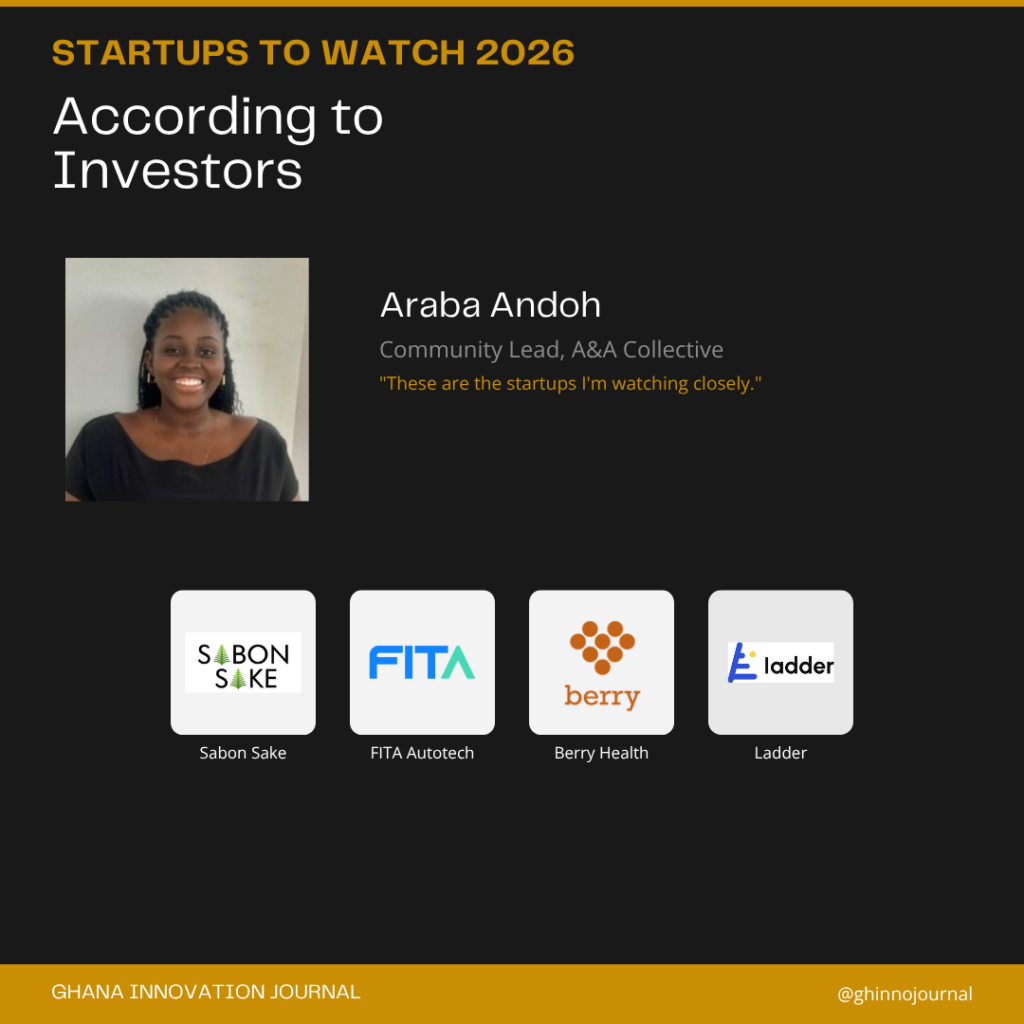
FITA Autotech: We all know the struggle with car repairs in Ghana. The endless runaround, the “it’s your fuel pump” diagnosis for the fifth time, the cheating, the unreliability, the lack of professionalism. It’s a whole drama.
FITA Autotech is here to change the game. They simplify vehicle maintenance and make sure all waste is responsibly recycled. From modern repairs and digital tracking to financing and rentals, they’ve successfully built a system that actually works.
What I really love is their repair financing. Imagine needing to replace your engine or gearbox (yes, I’ve done both) without having to cough up nearly 16,000 cedis on the spot. And their vehicle compliance service? A lifesaver. No more wasting days chasing down your roadworthy certificate or battling insurance claims as they handle it all, so you don’t have to.
So, the next time you’re stranded on the Tema Motorway because your AC belt has snapped and your mechanic, who’s now rejecting your calls after the 100th try, has gone MIA — you’ll know exactly who to rely on.
Sabon Sake: Agriculture in Ghana and across much of West Africa still produces a large amount of waste that is often burned or left to decay in the open. That practice affects soil quality over time and contributes to emissions, while farmers continue to deal with declining yields and rising input costs.
Sabon Sake is working on a different approach by turning agricultural waste into usable soil inputs. Instead of treating crop residue as a problem, they convert it into biochar-based products that can improve soil fertility, water retention, and long-term productivity.
Berry Health: They’re making healthcare more accessible and affordable in a way that actually feels human. Sometimes, you just want to speak to a doctor instead of Googling your symptoms—and Berry Health makes that possible, without the hassle of visiting a hospital. They offer discreet, specialized services in areas that are often taboo or difficult to talk about, like STIs, mental health, and hair loss (including alopecia), alongside general health support.
Unlike typical telemedicine platforms where you might speak to a different doctor each time, Berry Health has a team of full-time doctors and consultants so you get that all-important continuity of care ( this needs to be verified btw but it looks like that)
What really sets them apart is their “phygital” model, they combine the convenience of telehealth (digital) with the reassurance of an actual physical clinic (physical). So it’s not just a virtual consultation or a floating teleheath app; they’ve built a full care cycle, from diagnosis to treatment to medication delivery.
Ladder: They’re making investing feel less intimidating and way more accessible—especially for young Ghanaians trying to make sense of their money in a pretty wild economic landscape. Saving in a bank isn’t enough—especially in Ghana, where we’ve seen it all: a depreciating cedi, collapsing banks, and the infamous haircut. It’s simply not enough to collect your paycheck at the end of the month and hope for the best. If you want to get ahead, you have to build wealth—slowly, steadily, and smartly.
Ladder provides the tools (and confidence) to start building wealth, even if you’re starting small. No more relying on sketchy investment agents or falling for schemes because you didn’t have the right information to make an informed choice.
What I love is how they put the power back in your hands with options to invest not just locally, but globally too. U.S. treasury bills, real estate, fixed income portfolio. This provides an opportunity to diversify, grow, and hedge your bets as well as plan for the long haul.
William Abrefa (Ex. Investment Analyst, Innovate Africa Fund)
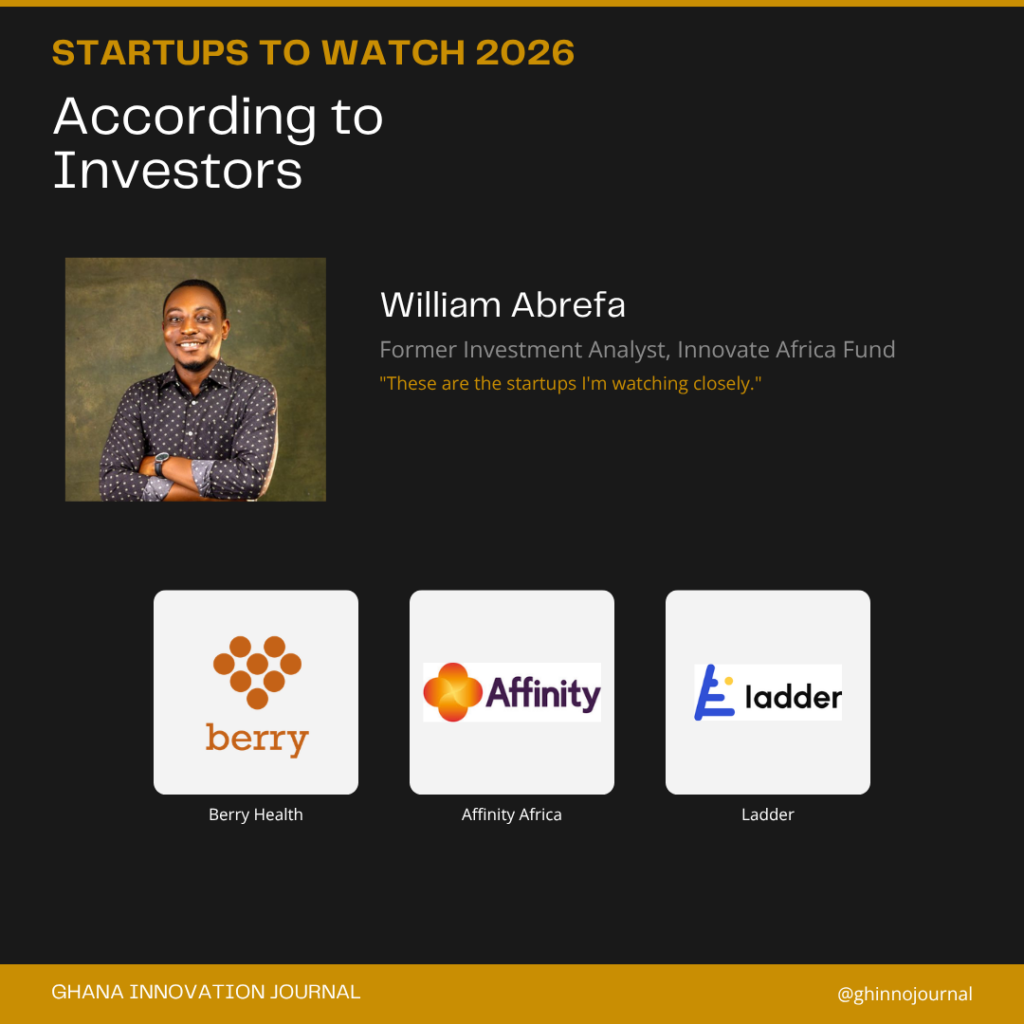
Berry Health: Berry Health is one to watch. What I like about them is how the founder’s real healthcare experience shines through in the thoughtful way they’re solving a real problem. They didn’t just jump into the market; they entered strategically, focusing on highly stigmatised conditions like hair loss and premature ejaculation, issues that a lot of people don’t even feel comfortable talking about, let alone seeking help for.
By honing in on these overlooked but important areas, they’ve built strong early traction and, more importantly, real trust with their users. I believe that trust will be the foundation for expanding into even more healthcare services and growing into a platform that truly makes medical services accessible for everyone.
Ladder: I’m excited about Ladder and what they’re building. They’ve built an all-in-one, AI-powered fintech platform that makes managing money easy, everything from tracking expenses and budgeting to saving and automating investments. What’s cool about them is how they use AI to take the stress and complexity out of money management.
As people become more familiar with using AI tools in their everyday lives, I think platforms like Ladder will only continue to gain traction. Over the past few years, there’s been a big shift in how people think about money. It’s not just about spending anymore, it’s about building wealth smartly. Ladder is showing up at exactly the right time to help people do just that. They’re only two years in and already showing strong traction, which tells me they’re onto something big.
Affinity: Affinity is another one I’m excited about, especially because of their focus on micro, small, and medium-sized businesses, the kinds of businesses that are often overlooked by traditional banks. I also love how they’ve tailored their services specifically to meet the needs of this audience, making banking more accessible, affordable, and relevant to them.
They’re helping businesses in the informal sector build a financial footprint, access credit, and unlock real growth opportunities, which I think is key in a market where a lot of economic activity happens informally.
Access to credit is vital for these businesses, and Affinity is meeting them where they are, not where traditional finance expects them to be. I see a lot of growth potential for them, especially considering they recently raised funding, and I believe they are on their way to becoming the go-to banking partner for business owners who want flexible, inclusive financial solutions built with them in mind.