Pangea Global Ventures did not set out to invest in Eden Tree. When the investment firm first got involved, its job was much simpler: help Eden Tree’s existing investor, I&P, find a buyer for its stake in the Ghanaian food company.
So Pangea started calling investors. The conversations kept coming, but the right investor did not. Pangea spoke to more than 100 investors. Some liked the company but said the deal was too small. Others said a transaction involving an existing shareholder selling shares fell outside their mandate. A smaller group of impact investors were interested in the company’s work, but few were set up to do secondary transactions involving established small and medium sized businesses.
Eden Tree itself was not the problem. Pangea had spent time inside the company’s deal room reviewing its financial model, growth projections, policies and other investment materials. The firm saw a business with strong revenues, an established leadership team and a role in Ghana’s food supply chain, alongside a broader impact case around smallholder farmers and food security.
By October 2025, after months of searching, Pangea started asking a different question: what if we invested ourselves? The shift changed Pangea’s role in the transaction. An adviser looking for an investor became an investor. Blackstar Africa joined the deal, while Pangea moved onto Eden Tree’s cap table with a long term, permanent capital approach.
The investment also gives Eden Tree room for its next phase of growth, including cold chain infrastructure, irrigation, stronger relationships with farmers, AI based demand forecasting and new processed food products.
For Pangea, the Eden Tree deal also says something about a part of Ghana’s investment market it believes is underserved: established SMEs with revenues, traction and impact, but deal sizes too small for many institutional investors.
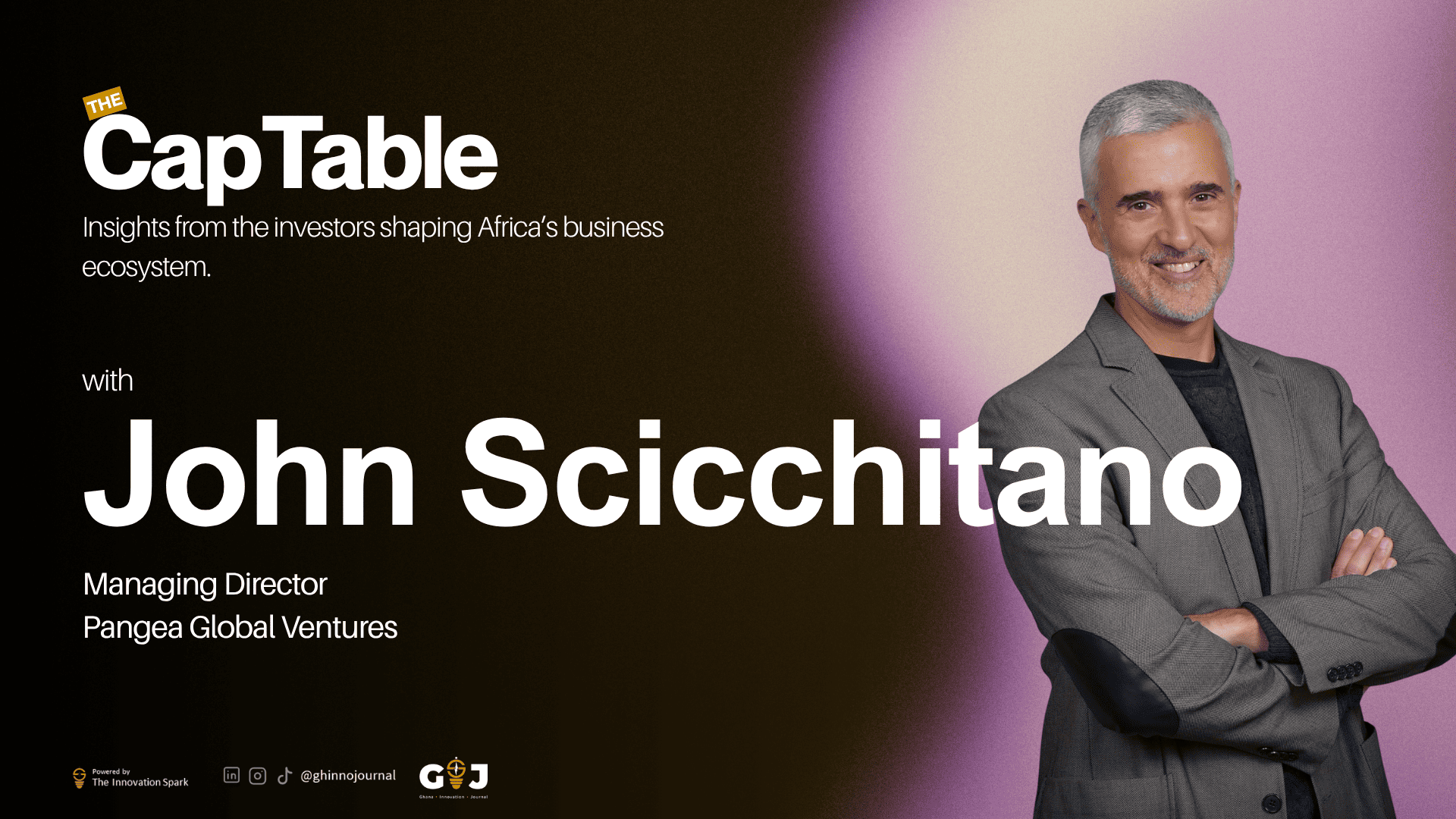
In this conversation with Pangea Global Ventures cofounders Tracy Boswell and John Scicchitano discuss how an advisory assignment became an investment, why SME exits remain difficult, what permanent capital means for African businesses and what founders should do now if they want to become investment or acquisition ready.
The interview has been edited for clarity and length.
What is Pangea and what does the company do?
Tracy: Pangea is an advisory company first. We look for promising SMEs across West Africa with strong growth, revenues and profits. We help them get to the level where they need to be to find investment and then coordinate investment facilitation for them.
How did you first get involved with Eden Tree?
Tracy: We met Eden Tree through I&P about a year ago. We were quite impressed with the organisation. It was contributing to food security, creating a market for smallholder farmers and had strong revenues. We were initially trying to help I&P exit. It became difficult to find an investor because of the type of transaction.
Towards the end of last year, we started thinking perhaps this was something we should invest in ourselves. We began investigating the company more deeply. We were also impressed with Catherine, her leadership and her team.
What made Eden Tree stand out?
Tracy: Our foundation is food security, and Eden Tree was offering exactly that. They were filling a gap by making quality fruits and vegetables available.
John: We also knew Eden Tree as customers. We buy their products. They are healthy, fresh, high quality and reliable. But Pangea is also about the people. Catherine is an inspirational leader. She has built Eden Tree over nearly 30 years, alongside a leadership team involving women and young people.
Our work starts with building relationships and trust, understanding the company, its aspirations and what the leadership team needs to grow and generate more impact.
What does it mean for a company to be investable but not investment ready?
John: A company might have all the elements of an investable business but still need help presenting itself properly to investors. A lot of the work is documentation and communication. We help prepare documents, build a deal room and communicate effectively with the right investors. Our work becomes easier when we choose the right companies. They already have the fundamentals and we help them get to the finish line.
What was the biggest challenge with Eden Tree?
John: Very little was challenging in the business itself. The big challenge was the secondary transaction and finding an investor willing to acquire the existing investor’s stake.
We spent time getting to know Eden Tree, its growth potential and impact. It was an attractive company, and we were frustrated that such an attractive company was unable to get a deal or term sheet from an investor. There were also some land documentation issues. Those had to be addressed during due diligence so the land could potentially be used as collateral in future transactions.
At what point did Pangea decide to invest itself?
Tracy: Since we began discussions with Injaro last year, it was probably towards the end of the year when we started taking a closer look at the enormous potential. We saw potential for growth outside Ghana, further opportunities to contribute to food security, greater reach and job creation through smallholder farmers and new markets. Once we started down that road and said, “Wow, this is a great company,” we didn’t look back.
You spoke to more than 100 investors. What happened?
John: We engaged more than 100 investors. All of them came back saying, “We can’t do it. It’s not in our mandate,” or, “We can’t do it. It’s too small.” The challenge was not reaching investors. Pangea has a strong investor database and relationships with investors. The challenge was finding investors whose mandate matched a secondary transaction of this size. Very few impact investors are able to do secondary transactions.
What did you do during the periods when investor conversations went quiet?
Tracy: Quiet times require you to shift. We changed the types of investors we were approaching. But we also started asking, “What else can we do?” That’s when we started thinking about Eden Tree as an asset we might acquire ourselves and how we could enhance the impact metrics we already care about. There was tremendous potential to grow those impact metrics through Eden Tree.
What did Blackstar Africa bring into the transaction?
John: Blackstar Africa is our partner under the leadership of Grant Weber, who is an operator. They are bringing operational and management expertise. Grant has been in Ghana for almost two decades, so he understands the context.
He also brings technology expertise. For example, we want to use AI for forecasting. We want to forecast how much lettuce will be needed on the shelves of Melcom and MaxMart over the next three months.
We’ll also pursue new markets beyond fresh fruits, including processed fruits, dried foods, dried spices and perhaps export markets.
Pangea describes itself as a permanent capital vehicle. What does this mean?
John: Pangea is not a fund. We are a permanent capital vehicle. You might call it a holding company. In some ways, you could call us an angel investor because we’re looking at small and medium sized deals that otherwise wouldn’t get done. We’re not focused particularly on startups. We’re looking for traction. We’re looking for companies that have proven they can execute.
Blackstar Africa has a similar philosophy, and we’re learning from their experience as a holding company. Partners bring funds to Pangea for individual investments. We don’t have the institutional infrastructure of a conventional fund. We’re more like a holding company, and this is our first real transaction of this nature. We intend to do more.
How does the Eden Tree transaction work?
John: This is a secondary transaction, which means we’re buying shares from another investor. Before we came in, there were essentially three shareholders: I&P, the founder Catherine and another investor who you could describe as a friends and family investor.
I wouldn’t call this a buyout. It’s a secondary transaction, principally involving the purchase of I&P’s shares. We bought most of their shares. They still have a small shareholding and remain on the board. Catherine remains a shareholder and remains on the board.
The third investor has been fully bought out. Pangea and Blackstar now own shares in the company alongside the remaining shareholders.
Why is permanent capital important for a company such as Eden Tree?
John: Permanent means we don’t have to exit. An investor such as I&P has a timeline. An equity investor comes in for a period, has investors of its own and eventually needs to return capital. It’s been 10 years since they invested. Eventually, they need to exit. Those exits are difficult, especially for medium sized companies.
We come in because there is a gap in the market for these secondary transactions. And Eden Tree will need more capital. We want to invest in cold storage and farmers because farmers are really the key to the operation. When farmers increase their yields and productivity, Eden Tree benefits and the impact increases. We’re raising more capital now. This is only the beginning.
Why are SME exits still so difficult?
John: There are many investors doing acquisitions, but they are larger investors. Very few are doing SME acquisitions. They are looking for much larger ticket sizes. So ticket size is a real impediment. At the same time, impact investing assets under management are growing and there is a lot of activity in Ghana. There are new funds, commercial banks looking for SME deal flow and initiatives supporting new investment vehicles. But gaps remain. Secondary transactions are one of those gaps.
What does this transaction mean for Ghana’s investment ecosystem?
Tracy: It’s important because it shows Africa is investable and companies are succeeding. They are able to grow and scale, so capital needs to come into the market.
John: Exits are notoriously difficult, but they are possible. Anyone hearing about this transaction can see it is possible for an investor to come into an African SME and eventually exit. We need more of these transactions, not only for bigger companies but smaller ones too.
For us, this is a signal to local and global investors that Ghana has institutional grade, attractive investments. Capital flowing to Kenya, South Africa, Egypt and Nigeria can and should also be coming to Ghana.
What are you hoping to change at Eden Tree?
Tracy: We want to automate a lot of things, enhance existing relationships and bring in new ideas around smallholder farmers while keeping the staff engaged.
John: Blackstar will bring operational expertise and technology. We want to use AI for forecasting and look at solar powered irrigation. Farmers cannot rely on one rainy season each year. Eden Tree’s new ownership gives us an opportunity to bring more investment into irrigation so farmers have what they need to produce fruits and vegetables cost effectively.
Why is cold chain such an important part of the investment?
John: The estimates around food loss are shocking. For fresh foods such as lettuce, cabbage and peppers, losses are often estimated at more than 50% between the farm and the table. Even cowpea losses are estimated at around 30% because of issues such as pest attacks. Loss is waste. Loss is expense. We need to reduce waste and improve transportation. We need more cold chain. It’s expensive, but the returns on investment are clear.
Cooling needs to exist near farms and further downstream. Not everyone shops at MaxMart or Melcom. People also buy from local markets. A market woman selling tomatoes should be able to refrigerate some of her stock and sell it the next day rather than being forced to sell everything in one day. So this is productive investment. It generates better incomes. It is not only about making money. There is an impact side as well.
What does success look like for Eden Tree five years from now?
Tracy: Profits and efficiency. How do we improve efficiency and create profit to move the company forward? The other one is impact. How do we measure our impact by closing the food security gap and reducing harvest and post harvest losses?
John: Cost of a healthy diet. We need to drive down the cost of a healthy diet. We need to make cabbage, carrots, peppers and tomatoes affordable and accessible to Ghanaian families and their children. In five years, I want to see Eden Tree and its competitors increasing yields at the farm gate, improving incomes for farmers and delivering more lettuce, tomatoes and cabbage to Ghanaian consumers at good prices. If we reduce waste and invest in irrigation and cold chain, we contribute measurably to the cost of a healthy diet. Consumers benefit, farmers benefit and the marketplace benefits. Eden Tree is more than a deal. It’s Ghanaian development.
What should SMEs do now if they want to become attractive for an acquisition?
Tracy: Focus on revenue, profit and efficiency. How can you improve business efficiency to improve your bottom line? Also look at impact. What impact are you measuring? Are you creating jobs for young people and women? Are you providing the structures women need to remain in work?
And look at your structure and governance. Do you have a sound board and governance system so the company can continue regardless of who is in power?
John: SMEs also need to think about the right financial instrument. What do you need to grow? What kind of capital do you need? Often it’s debt. Sometimes equity is needed. They can work together.
And companies should seek good advisory support when raising capital. Founders need to focus on running the company well and seek support for the capital raising process. Legal advice also matters. O-Larey Law Firm wqw critical to this transaction. Any SME approaching a transaction needs legal support at some point.
What role should advisory firms play in the SME ecosystem?
John: Advisory services are important, but there needs to be a marketplace for quality advisory services. A lot of advisory work today is driven by NGOs and donor projects, and it does not always get companies to the finish line. We believe private sector providers have an important role because they are accountable for results. There are many advisors in the ecosystem. The important thing is finding one you trust and one that understands your business.
Donor funding also has a role. Rather than only giving companies grants and running programmes, more resources could support quality advisory services. This could generate more deal flow, more business growth, more jobs and more development.
What is your final advice to African SMEs?
Tracy: Focus on your strengths and what you’re passionate about. But also seek advisory services. No leader can do everything. Know your specialty and rely on people whose specialty is helping businesses and finding access to capital.
John: Grow in a healthy way. Steady, patient growth is attractive to investors. Demonstrating steady growth is one of the best things a company can do.
I see entrepreneurs spending a lot of time chasing grants. Grants can be useful, but they can also become a distraction when companies stop focusing on steady business growth. Look beyond grants. Look for patient capital at the right size. There are instruments ranging from microfinance and rural banks to non bank financial institutions. Resources are available. Grow steadily, and each year you grow, you open up more opportunities for investment.