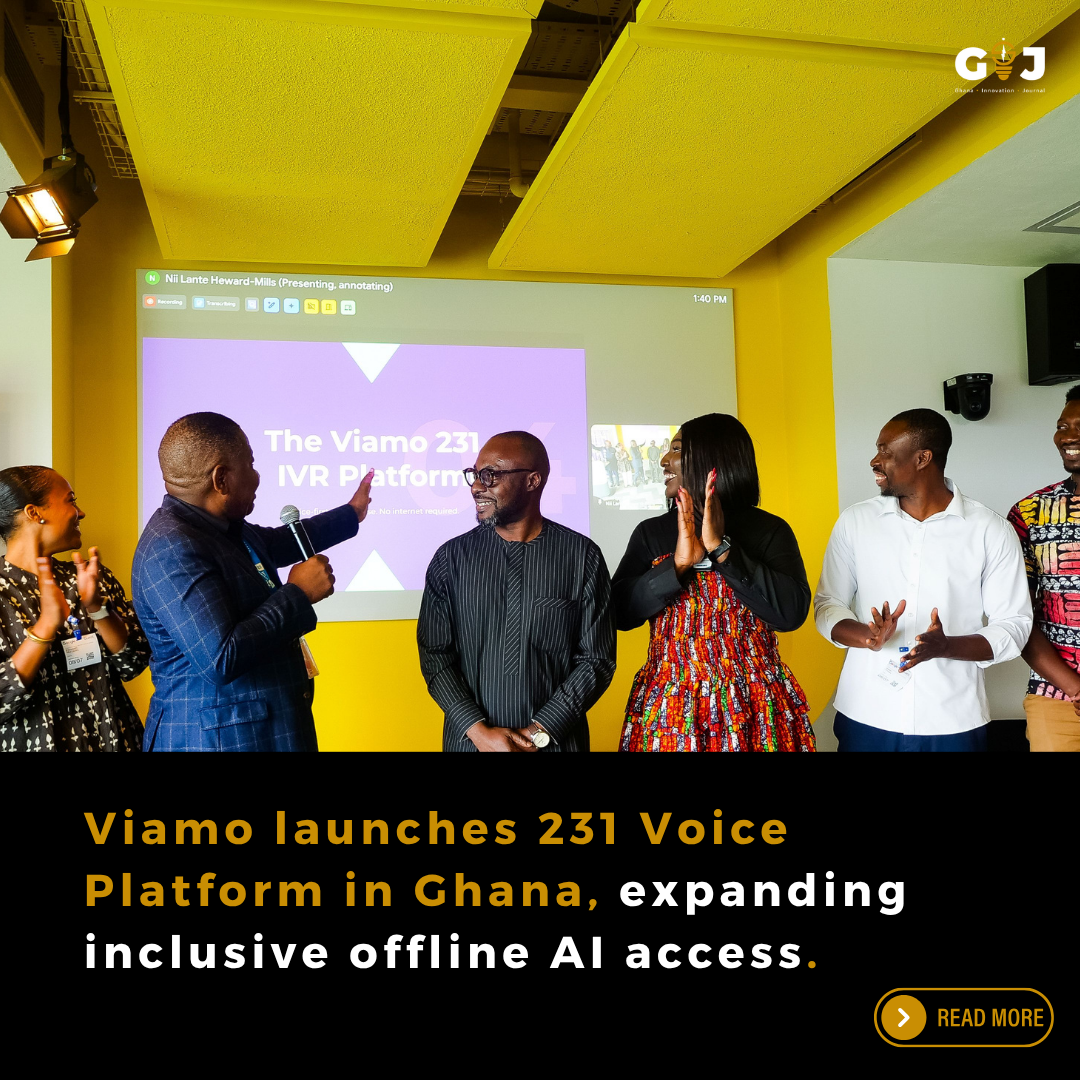
Viamo has officially launched the Viamo 231 Voice Platform in Ghana, creating a national voice channel through which organisations can reach and engage people who may be excluded from internet-first digital services.
Started in Ghana in 2012 and now operating across 23 countries in Africa, Asia and the Middle East, Viamo’s partnership with MTN brings critical information and AI-enabled services to people through the mobile phones they already own.
The Ghana platform is Viamo’s fourth platform in partnership with MTN, following Liberia, Zambia and Rwanda, with Nigeria scheduled for 2027. The collaboration brings together MTN’s telecommunications infrastructure and Viamo’s mobile engagement technology to make critical information and services more accessible at scale.
Through 231, users can access information and interactive services by voice using a basic mobile phone. The platform is toll-free to the end user and supports Twi, Ewe, Hausa, Dagbani, Ga and English, providing a pathway to national-scale communication that does not depend on smartphone ownership or internet connectivity.
“Viamo started in Ghana in 2012 with a simple idea: use technology to make critical information accessible to everyone. Fourteen years later, after taking that Ghanaian innovation to 23 countries, 231 brings that journey home.
“We want NGOs, government and the private sector to see 231 as infrastructure they can plug into — to reach more people, listen to communities and make their programmes and services more inclusive,” said Dr. Nii Lante Heward-Mills, Country Director for Viamo Ghana and Liberia.
AI THAT DOES NOT REQUIRE THE INTERNET
The platform also provides an entry point for organisations seeking to deploy Voice AI for populations beyond conventional digital channels.
Through Viamo’s Ask Viamo Anything (AVA) technology, users can ask questions naturally over a phone call and receive personalised spoken responses. Partner organisations can connect their own approved content and knowledge bases, creating applications for health, education, agriculture, financial inclusion, livelihoods and public information.
AVA can also provide organisations with insights into the questions communities are asking, helping programmes identify information gaps and emerging needs. Viamo has implemented offline AI in 13 countries in 10 languages.
The launch took place at the Google AI Community Centre in Accra and included a keynote address by Mr. Edmond Moukala, UNESCO Country Representative, presentations on offline Voice AI, a live demonstration of 231 and a panel discussion on “AI for Every Ghanaian: Unlocking Inclusive Innovation Through AI.”
“Conversational AI is not a luxury for the elite; it is a lifeline for the underserved,” Moukala said.
The event hosted leader in the Ghanaian AI community such as Ronald Tagoe of mNotify, Brendon Gonouya of AyaData, Winifred Cobblah of the Ghana Health Service and Ato Ulzen Appiah of Academic City University.
231 USE CASES
With the platform now live, Viamo is inviting organisations to explore collaborations that use 231 as infrastructure for national communication, behaviour change and two-way engagement.
For international and local NGOs, this could mean extending SBC campaigns, humanitarian information, beneficiary feedback, agricultural advisory, health communication or education programmes to harder-to-reach communities. For government ministries and agencies, 231 can support nationwide public information campaigns, citizen engagement and behaviour change initiatives.
For FMCGs and financial institutions, the platform creates opportunities for inclusive consumer education, product information, financial literacy, research and engagement with populations beyond internet-based channels. Research agencies can use voice for surveys, rapid assessments and community insights, while AI companies and organisations developing language models can explore collaboration around local-language speech, datasets, testing and inclusive Voice AI applications.