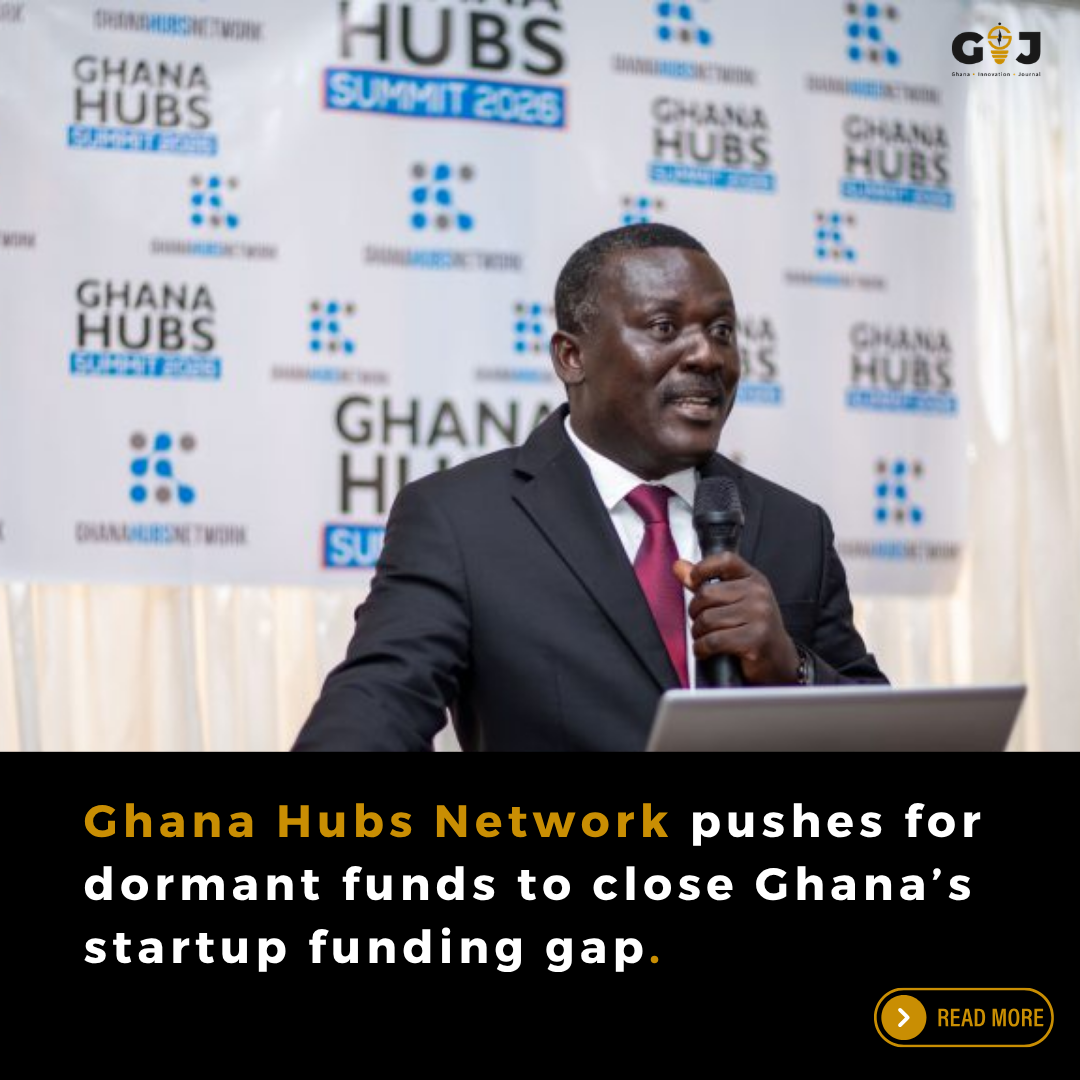
The Ghana Hubs Network wants the government to put part of Ghana’s dormant funds behind startups and early-stage businesses, arguing that the money could help address one of the ecosystem’s most persistent problems i.e the lack of capital available before a startup becomes investable.
The call comes as the Ministry of Finance develops a framework for putting dormant funds to productive use while preserving the rights of account holders to reclaim their assets.
There is significant money sitting in these accounts.
A 2024 analysis by the Institute for Liberty and Policy Innovation put the combined value of dormant funds held with the Bank of Ghana at almost GHS 500 million. The amount comprised more than GHS 167.8 million in local currency, alongside $14.6 million, £2.4 million and €2.3 million. The figures covered dormant funds accumulated between 2016 and 2023.
ILAPI also reported 1,448,660 dormant accounts transferred to the Bank of Ghana between 2021 and July 2024.
The figures put some scale behind the current policy debate. Ghana is sitting on substantial pools of capital while businesses across the country continue to struggle to access financing.
For the Ghana Hubs Network, part of this capital should support the companies and entrepreneurs building future sources of economic activity.
The network made the case in a statement issued on August 11, calling on government to consider directing a significant portion of eligible dormant funds towards innovation, entrepreneurship and enterprise development.
The argument centres on a gap in the startup financing pipeline.
Ghana has founders developing new products and businesses, but many struggle to finance the stage between an idea and a business with enough traction to attract commercial investors.
A founder might need funding to build a prototype, test a product with customers, develop intellectual property or demonstrate initial market demand. At this point, the business often has too little revenue for traditional lenders and too much risk for venture capital investors.
Dr Gordon Adomdza, Executive Director of CEIBS Africa and former Associate Professor of Entrepreneurship at Ashesi University, said the traditional startup funding cycle does not reflect the conditions facing many businesses in developing economies.
“Most startups in the developing world would not encounter the traditional early-stage angel investor,” Adomdza said.
He argues that startups often need grant-like funding to build and test their products before they reach the point where commercial investors are willing to take the risk.
This is where GHN sees dormant funds fitting into Ghana’s funding ecosystem.
The network is proposing a Dormant Assets Innovation and Enterprise Fund. The proposed fund would provide pre-seed grants for prototype and MVP development, support the commercialisation of university and research-based innovations, and provide targeted funding for women and young entrepreneurs.
GHN also proposes combining grants with private investment for startups that have already demonstrated traction, while providing funding for innovation hubs and other ecosystem organisations that help businesses access technical support and markets.
The proposal would give dormant funds a longer-term role in the economy rather than treating them as a conventional government funding programme.
GHN wants the fund to operate independently, with clear funding criteria, professional management, measurable outcomes and safeguards against political interference. It also proposes recycling returns from later-stage investments back into the early-stage funding pool.
There are international examples of governments using dormant assets for similar purposes.
The UK’s Dormant Assets Scheme has directed dormant funds towards social investment, employment programmes and social enterprises. Ireland has also used its Dormant Accounts Fund to support social enterprises through grants for capital projects and feasibility studies.
Ghana has previously considered a similar approach. The country’s Social Enterprise Policy proposed exploring dormant accounts as a source of funding for the social enterprise sector.
The current debate extends the question beyond social enterprise to the wider startup and innovation ecosystem.
The challenge will be designing a mechanism that provides risk capital without turning dormant funds into another politically driven government disbursement programme.
For startups, the most valuable intervention would come early, before a business has revenue, collateral or a proven investment track record.
For policymakers, the opportunity is to use a portion of dormant capital to help businesses reach the point where private capital becomes viable.
With more than GHS500 million identified in dormant accounts at the Bank of Ghana, the question is no longer whether there is capital sitting idle.
The question is what Ghana should do with it.
Leave a Reply